Showing posts with label cross-curricular. Show all posts

Sunday, August 24, 2008

to the 4th dimension


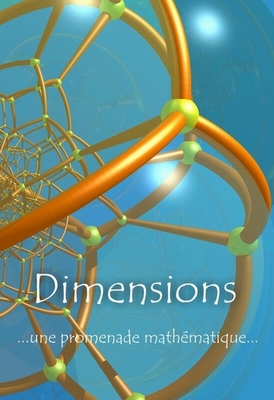
If you teach geometry, science, or geography, Dimensions, a series of nine short videos discusses the first through fourth dimensions. The videos are visually amazing, each one 'presented' by a theorist, with beautiful explanatory graphics.

The videos take a holistic approach, as each theorist in history expands the scientific knowledge of the time. Mathematical concepts are developed through exploration of physical geography in a way that makes each more accessible.

You may download the entire series of nine episodes, each 13 minutes long, or view them online. Chapters 1-8 grow increasingly difficult in concepts and mathematics. Chapters 1, 2, 3, 4, and 9 are all appropriate for middle and high schoolers, while the others are geared towards more advanced secondary school courses or university level. See the teaching guide for more information.

Below is a trailer for the Dimensions series. Since it is taught in several languages including English, the trailer shows graphics with a musical background. The series chapters, however, are delivered in well-spoken English.

Monday, August 11, 2008

satyrical maps and war dogs


If you are teaching the history of World War I, or war literature from the period, BiblioOdyssey features satyrical propaganda maps that make wonderful learning tools:

Maps that featured regional stereotypes, animals and assorted symbolic imagery and mythical and historic figures associated with particular countries became a popular vehicle in which prejudices, humour and political commentary could be assembled in a visual format.

The rise of the serio-comic map caricature genre, that had really begun in about 1870 (although the roots of the tradition stretch back at least to Munster's 'Geographica'** from the mid-1500s), reached its peak of popularity at the beginning of World War One.

The humorous propaganda maps stirred nationalistic fervour, mocked and belittled enemies and even served as a mnemonic tool for students to learn their geography. In many of the above maps you can see that the more distorted or grotesque depictions are saved for the least favoured nations while the home side is of course rendered as normal or heroic. The style declined in popularity as the war dragged on and film and posters became the more dominant media of propaganda. [quote from BiblioOdyssey]

Satyrical map publishers capitalized on visual appeal to inform the citizenry, but they also engaged their readers with the interactive appeal of a riddle:

Hark! hark! the dogs do bark!
The beggars are coming to town
Some in rags and some in jags
And one in a velvet gown

See if your students can solve the riddle.

Unfortunately, war is always relevant. Have your students draw a similar map depicting the current Russia-Georgia conflict, and write their own rhyming riddle.

Teachers of literature, here's the opening verse of Wilfred Owen's "Dulce et Decorum Est" to get you thinking about a war poetry lesson plan with history and geography providing the structure:

Bent double, like old beggars under sacks,
Knock-kneed, coughing like hags, we cursed through sludge,
Till on the haunting flares2 we turned our backs
And towards our distant rest3 began to trudge.
Men marched asleep. Many had lost their boots
But limped on, blood-shod. All went lame; all blind;
Drunk with fatigue; deaf even to the hoots4
Of tired, outstripped5 Five-Nines6 that dropped behind.

Thursday, May 29, 2008

the art of science

Surfing the web is an exercise in making connections. We are immersed in what seems like a vast sea of chaotic noise, yet find ourselves congregating around those intersections of dialog from which form a synthesis of great ideas. Two days ago, I clicked on a New York Times article, New Curriculum to Unite Art and Science, which had climbed in popularity so much that it appeared on NYT's top ten list of most-read articles. Obviously, the concept appeals to many. Author Natalie Angier writes about the battle between the sciences and the humanities:
It’s been some 50 years since the physicist-turned-novelist C.P. Snow delivered his famous “Two Cultures” lecture at the University of Cambridge, in which he decried the “gulf of mutual incomprehension,” the “hostility and dislike” that divided the world’s “natural scientists,” its chemists, engineers, physicists and biologists, from its “literary intellectuals,” a group that, by Snow’s reckoning, included pretty much everyone who wasn’t a scientist. His critique set off a frenzy of hand-wringing that continues to this day, particularly in the United States, as educators, policymakers and other observers bemoan the Balkanization of knowledge, the scientific illiteracy of the general public and the chronic academic turf wars that are all too easily lampooned.

Binghamton University in New York has developed the New Humanities Initiative to counteract the split, not only to bridge understanding between two warring factions, but to encourage cross-curricular learning: we each have something to learn from the other.

As a huge fan of cross-curricular teaching, I believe using language arts to help students relate to science brings a bounty of understanding to both subjects. So, I was very excited to find this blog post from Munna on the run about an artist from London who has always loved the idea of physics more than the practice of it. Munna wrote poems about physics, but failed--miserably--at exams, while a student. It wasn't until later that the author was able to bridge the literary with the physical. Staying grounded in the poetics, Munna uses the 26 letters of the alphabet as symbolic placeholders for intensive physics training. Here's an example: (click on the image to see it larger)
You can view the entire alphabet here. This is how the project came about:
Many years later, in 2005, I decided that I wanted to try my hand at creating some kind of art. And all I could think of was Physics. Because 2005 happened to be the World Year of Physics. A celebration of 100 years of the theory of relativity.
I had this wild idea of creating typography from physics diagrams. After months of research and going through hundreds of those, I finally got hold of 26 diagrams that looked liked the letters of the alphabet. This poster literally transported me into a parallel universe.


Lesson Plan
Let's say you've got a class of roughly 26 students. Have each student take one of Munna's letters to create a cross-curricular project. First, research the concept the letter represents. Synthesize those ideas onto Google documents or presentation slides. If you have students working in pairs on a couple of letters, they can share those documents and you can monitor their progress. Finally, they can demonstrate what they've learned by presenting
the concepts behind the art to their classmates.

Scientific illiteracy takes a bow and exits the stage. All I can say is, it's in the air, this idea of connecting in order to bridge knowledge.