Showing posts with label video. Show all posts
Showing posts with label video. Show all posts
Sunday, September 14, 2008
animated poetry
Billy Collins, former US poet laureate, presents his poems in animated videos. These are wonderfully imaginative devices to help us visualize words in verse. Here is my favorite, "Now and Then":


Saturday, September 6, 2008
uncommon craftsmanship
 So you're a teacher and you're a techie. But do you really feel comfortable teaching your students how to use all those Web 2.0 tools that you want them to become familiar with?
Of course, their tech expertise was nurtured in the womb. Kids and teens just seem to get it, when it comes to figuring out how to use applications. However, they may not fully understand the purpose of the tool or why they should use it. They will look to your for that explanation.
Fortunately, you can look to Common Craft, which claims that their "product is explanation." And their language is "plain English." Using conspicuously non-techie graphics, Common Craft explains the why? of web 2.0 tools. Two of their most popular videos explain how to use RSS (my personal favorite) and wikis, both of which are common tools for the classroom.
Whew! I can hear those sighs of relief all over.
Even if you don't use any of their videos (many are freely available), you'll want to watch one for a tutorial in how to give a concise and comprehesible presentation. This one explains, in plain English, how to use Google Docs:
Sunday, August 24, 2008
to the 4th dimension
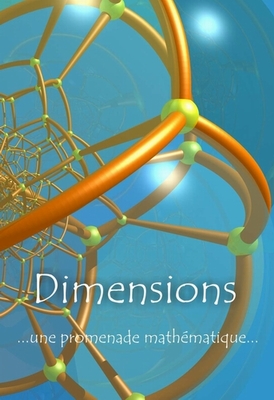
If you teach geometry, science, or geography, Dimensions, a series of nine short videos discusses the first through fourth dimensions. The videos are visually amazing, each one 'presented' by a theorist, with beautiful explanatory graphics.
The videos take a holistic approach, as each theorist in history expands the scientific knowledge of the time. Mathematical concepts are developed through exploration of physical geography in a way that makes each more accessible.
You may download the entire series of nine episodes, each 13 minutes long, or view them online. Chapters 1-8 grow increasingly difficult in concepts and mathematics. Chapters 1, 2, 3, 4, and 9 are all appropriate for middle and high schoolers, while the others are geared towards more advanced secondary school courses or university level. See the teaching guide for more information.
Below is a trailer for the Dimensions series. Since it is taught in several languages including English, the trailer shows graphics with a musical background. The series chapters, however, are delivered in well-spoken English.
Tuesday, August 19, 2008
open and scholarly
 We often hear complaints about the dearth of reputable sources on the web. While it is true that most worthy source materials may still be found in bricks-and-mortar research and community libraries, or locked up in subscription-only online depositories, there are excellent sources readily, and freely, available to our students.
The Directory of Open Access Journals DOAJ should be at the forefront of sources for all research papers you assign, both as source material for references and as outstanding examples of research paper writing. The articles provide excellent lessons in reading comprehension, as well.
Subjects represented by the DOAJ are comprehensive, from the humanities to the sciences, to business and economics. Here's an article from journal Romantic Textualities that I'll definitely add to my reading list for Romantic Era studies, "Remediating Byron: Textual Information Overload During Byron's 1816 Travels":
Cultural insights into the communication phenomenon of textual Information Overload existed during the Romantic period. In 1800, for example, Wordsworth lamented the multifarious transmission and reception of information which, he found, blunted ‘the discriminating powers of the mind’ resulting in the mind becoming unfit for ‘voluntary exertion’ because the (over)saturation of print media precludes one to ‘think long and deeply’.
So we're not the only generation to experience the onslaught of information overload. How's that for relevance?
On the subject of scholarly articles, how do students tell the difference? Here's a video from the library at University of Wisconsin-Madison which spells it out so we can all understand. The video is a keeper; you'll want to show it to your classes and provide the link on your website.
Monday, August 18, 2008
teacher techies

You've made the commitment to teach from a technological platform, thereby bringing your classroom into the 21st century. You've spent the summer researching your options and trying out various teacher tech tools. Now that the new semester is gearing up, however, the time dedicated to your own learning objectives has to be put aside while you devote all your time to teaching.
Still, you think to yourself wistfully: if only I had time to figure out how to stream video from my website, so I could share a particular lesson with other departmental faculty or parents.
You need EdTech101, a quick tutorial and reference guide for educators, delivered in an easy to assimilate podcast. Your host, Brian C. Dvorak, is a California public school district technology guru, determined to provide techno-tips to "fellow educators out there in the trenches."
Each of Dvorak's podcasts accompanies a link to whatever product he's featuring. By opening that link in another tab in your browser, you can preview the application at the same time he's telling you about it.
As for that video streaming project? EdTech101 reviews UStream.tv, an amazingly easy method for accomplishing this feat. Dvorak is sensitive to educators' needs for security and privacy, and suggests ways to ensure both while using this application.
A couple of his more recent reviews include Animoto and Jing, two web apps I've featured in the past month. Assign EdTech101's podcasts as homework assignments for your students and they will come into class ready to create great presentations.
Friday, August 15, 2008
understanding torture
When I first began teaching George Orwell's 1984, I had a heck of a time getting a copy of the Stanford Prison Experiment video, which makes frighteningly clear how ordinary people can become torture agents.
Now, of course, viewing is as quick and easy as a YouTube click. I won't say enjoy.
Now, of course, viewing is as quick and easy as a YouTube click. I won't say enjoy.
Thursday, August 14, 2008
field trip: national library of Ireland

The National Library of Ireland offers a virtual exhibition of the life and times of William Butler Yeats. Early on, when I dreamed about the promise of the internet, this is close to the form it took.
The exhibit is built with flash technology that allows me to wander about the rooms of the library, stopping at will to look more closely at whatever catches my eye. There are various videos displaying original footage of the man and the Irish world he lived in and created.
You can also click on the interactive button at the bottom of the screen in case you think you might have missed something while maneuvering throughout the halls and rooms, such as a handwritten copy of "The Lake Isle of Innisfree' or the copy of William Blake's "The Marriage of Heaven and Hell," which is heavily annotated by Yeats.
I can't think of a better way for your students to get to the know the poet and the period of Irish literary culture he inspired.
Saturday, August 9, 2008
animate the classroom with Animoto
 It didn't take long for teachers to find the teachable moment in the Animoto video-making application. Now, Animoto has made special concessions for educators and students.
If you haven't tried Animoto, you should--it's a lot of fun to put a video together. The Animoto for Education site features some sample videos designed by teachers, but it's not fair for you to have all the fun.
The site explains how you can set up emails for your students that will enable you to have complete visibility over their creations, as well as provide for their privacy. The benefit to each student having his or her own account is that they can all create videos at the same time, and they can work on them at school or at home. With their own accounts, students can download their videos to present in class with or without an internet connection.
Here's an Animoto video I put together a few months ago to visualize Wordsworth's poem Tintern Abbey, emphasizing his themes of natural grandeur and soulful seclusion:
Tuesday, July 29, 2008
Jing is the thing

Got a presentation coming up that requires detailed graphics and step-by-step instructions? Want to produce a slideshow to show associates how to use a web application? Do you maintain a class blog featuring hands-on lessons?
You need a screen-capture application. Are you looking for an application that is both free and easy-to-use? You need Jing.
I always like to to try out applications before they are featured on this blog. I've been working with Jing for quite a while now, and I'm thrilled with it. Jing's creators referred to their baby as a 'project' rather than the beta designation that we're used to seeing, because they weren't sure whether or not it would actually become a real product. Now, a year later, they've announced their intentions to continue to develop and support Jing.
What I needed was an easy-to-use, free, screen capture application so that I could demonstrate how to do things on the web. Jing allows me to capture any site, crop it to the dimensions I need, and even add pointer arrows and text to get my ideas across. Here's an example:

It takes mere minutes to complete an image, and you can save it to your system or to a free online account at Screencast.com. You can even create a video with your own soundtrack.
Jing may be just the thing you need to get your presentations and blog instructions in shape. Download the software for pc or mac, then click on the little sun that sits above your screen. You can remove it if you prefer, but who doesn't like a little sunshine in their lives? You're ready to create.
Treat yourself to Jing's video screencast, which is a enlightening demonstration in itself.
Sunday, July 20, 2008
documentary heaven

One of my favorite blogs for sources, Open Culture, features SnagFilms, a site with a large collection of documentaries for free viewing. This is great news for those of us who teach report-writing and argument-position essays.
Is your class reading Night, by Elie Wiesel? Supplement with a viewing of Paper Clips:
Whitwell Middle School in rural Tennessee is the setting for this documentary about an extraordinary experiment in Holocaust education. Struggling to grasp the concept of six-million Holocaust victims, the students decide to collect six-million paper clips to better understand the extent of this crime against humanity. The film details how the students met Holocaust survivors from around the world and how the experience transformed them and their community.
Lots of teachers I know include the popular Super Size Me video as a writing topic relevant to teens and college students, to emphasize the horrifying effects of unhealthy eating:
In SUPER SIZE ME, filmmaker Morgan Spurlock unravels the American obesity epidemic by interviewing experts nationwide and by subjecting himself to a “McDonald’s only” diet for thirty days straight. His Sundance award-winning feature is as entertaining as it is horrifying as it dives into corporate responsibility, nutritional education, school lunch programs and how we as a nation are eating ourselves to death.
SnagFilms not only provides a long (and growing) list of excellent documentaries, they make it easy to snag--or embed--the film for viewing directly from your class website or blog. Here's an inspirational story about how a tour of Africa changed the life of soulful singer Alicia Keys. Enjoy.
Wednesday, July 16, 2008
visual science
While I love my subject, writing and literature, I also consider myself somewhat of an observer of science, although my appreciation for science did not come until I was an adult. The internet provides ways for teachers to round-out their teaching with visual resources that aid in cementing analytical theories. I've always been fascinated by the periodic table, and now I can study it with an accompanying video for each symbol. The Periodic Table of Videos, brought to us by the University of Nottingham, are both entertaining and informative. Here's the video of P for phosphorous.
While I was watching the video, I utilized the definr button on my toolbar to look up words and confirm definitions.
The phosphorous video also has a nice reference to Brave New World for us English teachers. It seems that if the scientist can easily refer to literature, the English teacher should be able to make a smooth reference to chemistry ;)
Related posts:
Out-of-pocket dictionaries
The art of science
Subscribe to:
Posts (Atom)

 Posts


